



People






University of Southampton
|
Country
United Kingdom of Great Britain and Northern Ireland (the)
| |
 Members
 |
48 |
 Projects
 |
38 |
 Articles
 |
8 |
 Contributor since:
 |
Wed, 06/30/2021 - 14:50 |

| AAA Member |
Actions
Projects
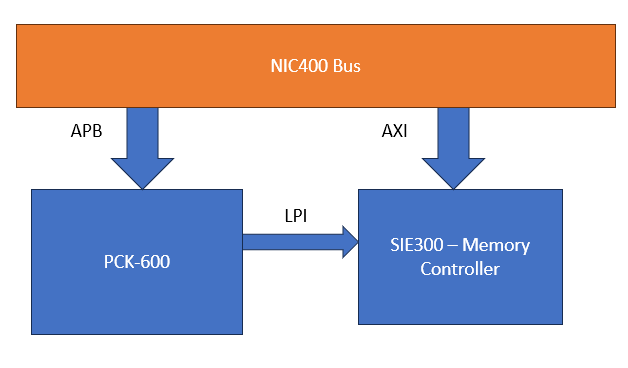
The PCK600 Arm IP provides components to allow a power control infrastructure to be distributed in a SoC in order to make a design energy efficient. Arm provide the IP as part of their Power Control System Architecture that can be used to control the power states of various parts of the system. This control of the power infrastructure is achieved through the use of the Power Policy Unit (PPU). This unit has an APB interface to allow for software control, and some low power interfaces that can connect to the power controllable IP within the system.
 Daniel Newbrook


This program is dedicated to the development of a System on Chip (SoC) platform, specifically designed to support learning and research activities within Indonesian academic institutions. The platform serves as an educational and research tool for students, lecturers, and researchers to gain hands-on experience in digital chip design.

 Trio Adiono
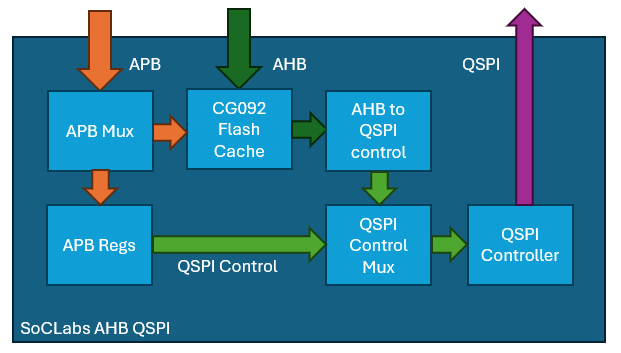
The instruction memory in the first tape out of nanosoc was implemented using SRAM. The benefit was the read bandwidth from this memory was very fast, the downside was on a power-on-reset, all the code was erased as SRAM is volatile memory. An alternative use of non-volatile memory would benefit applications where deployment of the ASIC does not allow, or simply time is not available for programming the SRAM after every power up.

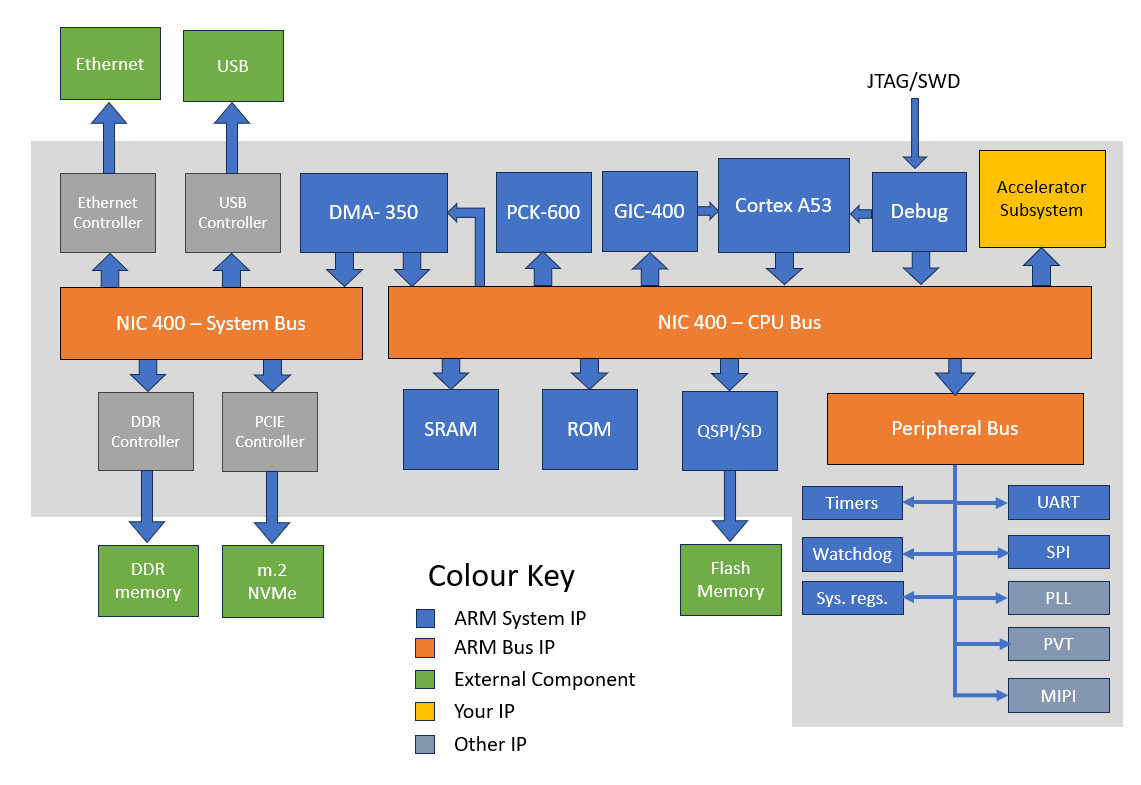
megasoc has been designed to provide a complex SoC component that can 'host' and support the development and evaluation of research components or subsystems. The design allows for seamless transition from FPGA to physical silicon implementation via a pre-verified programmable control system that allows reuse of software and diagnostic functionality to facilitate the configuration, control and diagnostic analysis of research hardware such as custom accelerators or signal processing.